
What is the most that you can do with the least?
What do you do when faced with a creative, business or life problem where the path forward is unclear? In such situations, it can be useful to ask yourself whether and how you might arrive at a successful solution by making the most of whatever resources you have to hand. Of finding a way to do the most with the least. As I wrote in We bought our career for thirty quid:
“The idea is the most important thing, not the equipment you use to execute it. You can build something new or create your career with next to nothing.”
When you apply a brutal simplicity of thought*, the perfect solution may well reveal itself within the most basic of resources.
I have always loved creative resourcefulness. I would like to present here two striking examples of this, which I happened upon over recent weeks.
This is what it is
Example one comes from Brenda Weischer’s January 2026 appearance on the How Long Gone podcast. The hosts of How Long Gone are not often lost for words, but they were audibly stunned at Weischer’s description of her bare-bones methods for recording her fashion podcast Brendawareness. Here is a brief exchange between How Long Gone host Jason Stewart and Weischer, discussing her primitive podcast set-up:
JS: “So you just record yours on your Blackberry and hit upload? How does it work?”
BW: “I got an iPhone gifted last summer. I don’t have a microphone. I don’t have anything. I just use voicenotes. That’s my production value. There’s this app called Voicenote or Record, or something. I don’t have like a podcast app or anything. So I just record and then it gets uploaded. That’s it. There’s no edits.”
The idea is the most important thing, not the tech you might use to disseminate it. Weischer is refreshingly honest about the intention behind her use of such basic methods to share her thoughts:
“[Fashion is] such a secretive world that I just hope to bring people a little bit closer to, but hopefully in an entertaining way. I think you can twist anything as marketing and say ‘I’m doing this to be real.’ But also, I don’t have production budget, so this is what it is. I can spin it in a way like everything is full of intention, but [that’s not the case].”
I love Weischer’s argument that there are really only two options for the kind of communication she is producing: bare bones or big budget. She says:
“With anything – a product, a design, a party, or anything – you either do low budget or high budget, and anything in between is just a mess or a waste of money. So it’s either you get the sponsor, you get the studio, you get someone to edit, or you don’t. So I don’t.”
The highest return on the smallest investment
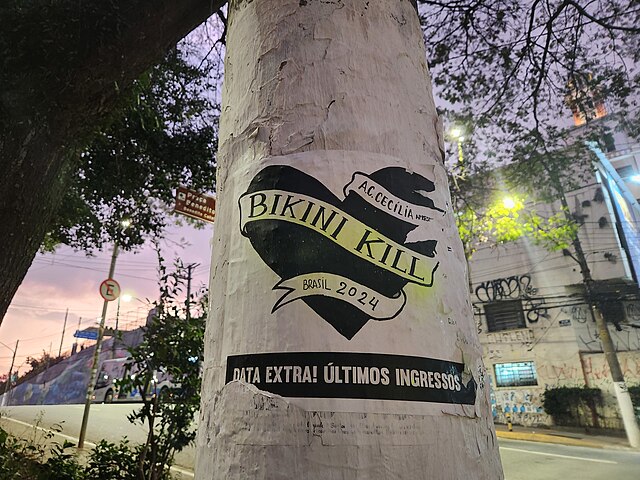
Example two comes from Rebel Girl, the memoir of Kathleen Hanna, singer for the feminist punk/riot grrrl band Bikini Kill. Throughout her career and indeed her life story, Hanna is consistent in taking a DIY approach to all challenges that come her way. To spread awareness and promote debate of feminism and feminist perspectives, she first uses home-made collage-based art and fanzines, then later on, raw and stripped-down punk rock music via her band Bikini Kill.
Hanna applies the punk rock DIY approach to creativity and problem solving. But she also points to the key influence of her childhood participation in a high school Junior Achievement programme. This was designed to help children “learn to start a business, sell a product, and make profits”. It taught her the principle of aiming always to make the highest possible return on investment. Hanna launched an operation producing cheese boards, which cost $1 to make and sold for $8.
At points in her adult life, Hanna made the decision to take up stripping as a means to fund her art, her band and her life. In her book, Hanna is clear-eyed about her motivations in taking on this work that is both risk-laden and for her deeply dispiriting. She views it as a purely transactional way to make money, and nothing more. She writes about how some Bikini Kill fans took and take issue with her for the apparent contradiction between her work as a stripper and her role as a feminist punk figurehead.
Hanna applies her principles of always seeking to do the most with the least to her work as a stripper:
“After my first night of work, I hit up a lingerie store for thongs, garters and fancy bras. I also bought a pair of white high heels from Kinney Shoes that cost exactly $10. I never wore any other shoes since I was trying to get the highest return on the smallest investment. Thank you Junior Achievement.”
After this initial outlay, Hanna refuses ever again to invest even one cent more in this work. This means that each time she feels compelled to return to stripping because money is tight, it can only generate profit.
These examples from Weischer and Hanna show two very different ways of using the resources available to you to solve creative problems and find ways to communicate what you want to say. No matter how intractable a problem might first appear to you, the solution can often be found in the resources you have to hand. No matter how basic those resources might at first appear.
What is the most that you can do with the least?
May you be nothing but kind today, to others and to yourself.
May today be nothing but kind to you and yours.
FOOTNOTES
* This phrase is borrowed from the book Brutal Simplicity of Thought by Lord Saatchi.
IMAGE
- Minimalism…… (22969073683) via Wikimedia Commons.
- Kano Tsunenobu – Mount Fuji in the Spring – Walters 35203 via Wikimedia Commons.
- Bikini Kill em São Paulo 2024 via Wikimedia Commons.
 MJCarty
.jpg)

