
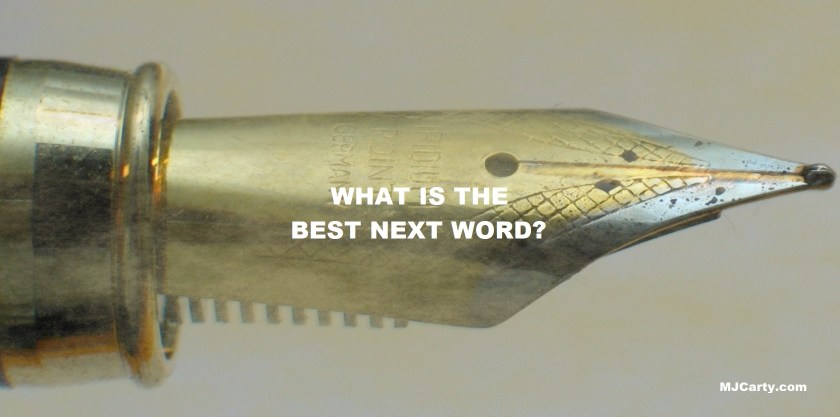
Writing is a joy. Writing well takes application. Writing better is an eternal aspiration, an ongoing search for the best next word.
Written or spoken, the word is perhaps the purest and certainly the swiftest way to conjure a world, to convey an idea, to share wisdom.
Writing offers endless possibility. Only music can rival writing for the potential to convey what is in your mind and in your heart. But the gift of being able to express oneself through music is much less prevalent in this world than the gift of writing.
Words can possess a kind of music. There are some wonderful words on this very topic in The Magician, Colm Tóibín’s masterful novel about the life of German novelist Thomas Mann. I could not recommend this book more highly. Throughout, Tóibín’s words sing with a subtle, patient and beautiful music, always conveying so much more than first appearances might suggest.
There is a quite lovely passage in The Magician about how music and language differ. Thomas Mann reflects on his novel Doctor Faustus, partly inspired by the composer Arnold Schoenberg – now an old man, as is Mann himself:
“How curious it was that across this American city lived the man who, when he was young, composed this lush music! Some of those early yearnings must still be with him, and he must feel sorrow that such tender expression was no longer possible. Some of the same emotions that the music evoked had, Thomas hoped, been captured in his novel, but words were not notes and sentences not chords.”
Words are not notes and sentences are not chords. But a perfectly chosen run of words can sing with a beautiful and unparalleled music all its own.
I am always on the lookout for insights into how writers compose words to convey what is in their hearts. This past week, I came across some great words on how James Frey – author of A Million Tiny Pieces – approaches his writing. Speaking on the How Long Gone podcast about his new novel Next to Heaven, Frey describes how he uses music to help him enter a “fever dream state” in which he can channel the feelings he wishes to express in words. “I have to feel what I’m writing about when I write it”, he says. “And writing’s a very physical process for me.”
For me, the real gold in this conversation comes when Frey describes the “flow state” that leads to his best writing. He says:
“When I write, I try to be absolutely as precise as possible. It’s always: ‘What’s the next word? What’s the next best word? Next best word, next best word, next best word. And it’s never about rules, it’s never about anything, but what is the next best word? What word will make me feel what I want a reader to feel? And I know if I can feel it in the moment while I’m writing it, there’s a high possibility that a reader will feel it when they read it.”
I love the idea of boiling down writing to the essence of identifying the best next word (if you will allow me slightly to rephrase Frey’s words), always prioritising how each word will make the reader feel. Frey expands on this point:
“All that matters to me is: How does the reader feel when they turn that last page? And do they say to themselves ‘Was that both worth it and extraordinary?’ That’s what I’m trying to do, every time, every word, every sentence, all of it. Provide a reader – and provide myself as I write it – with the most delightful and specific and unique experience I can do. And I believe if I do that, history will take care of me.”
Amen. Next time you find yourself tasked with writing some words, please consider – if only for a moment – what you want the reader to feel, and ask yourself: What is the best next word?
May you be nothing but kind today, to others and to yourself.
May today be nothing but kind to you and yours.
IMAGE
- Fountain-pen photograph via Wikimedia Commons.
 MJCarty
