
Unlikely but true: 1980s UK TV type Jeremy Beadle helped organise and promote the 1972 Bickershaw festival, featuring the Grateful Dead, Hawkwind, Donovan and more.
As you get older (and this coming week I happen to get one year older), there will be moments when long-buried memories return to you in the most remarkable manner. Reminders of different times. Reminders that, to quote LP Hartley’s The Go-Between, “the past is a foreign country; they do things differently there.”
Example: This past week, I was reminded of a strange tale I heard nearly three decades back, concerning long-deceased UK TV personality Jeremy Beadle and his pre-fame antics with the Grateful Dead and others.
Back in 1995, I worked with someone who told me an odd-sounding story concerning Jeremy Beadle, who their dad had known in the 1970s. I think they may have been acquaintances at university – but my memory of this tale told to me 29 years ago is somewhat unclear. The thing that really stuck out as odd in this tale was that in the early ’70s, Mr Beadle had, they claimed, helped organise a music festival. I think I recall mention of alleged dissatisfaction at the late Mr Beadle’s handling of the financial side of this festival. But I truly cannot recall the specifics.
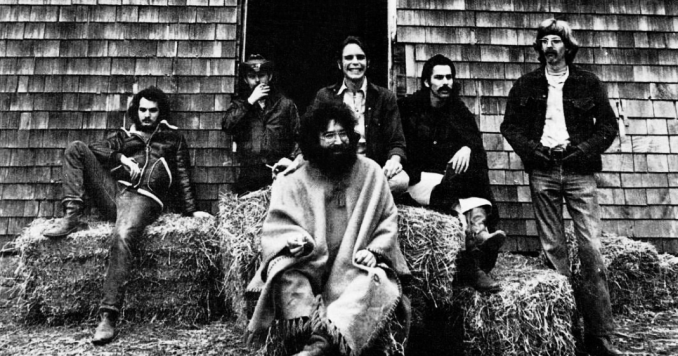
Fast forward 29 years to this past Monday (26 February 2024), when the excellent BBC Archive YouTube channel put up a video not only proving that this tale really was true, but also including footage of Beadle wheeling and dealing around the festival site. It seems Mr Beadle was deeply involved in the organisation of (what proved to be) a one-off music festival in (what was then) the coal mining town of Bickershaw in Lancashire in May 1972, and featuring the Grateful Dead, Hawkwind, Donovan and more.*

This BBC video is an amazing little time capsule. It confirms the truth of my 1995 colleague’s tale. It also provides a fascinating document of social attitudes, as music festival hordes from around the nation flock to a northern coal mining town. A clash of cultures just waiting to happen?
The 2024 viewer might be forgiven for thinking this inevitable. Today, parts of the worlds of politics and media seek actively to sow seeds of division and mistrust.
From the vantage point of today, it is striking to see archival evidence from 1972 of the welcoming and permissive openness of some old (and possibly retired?) Bickershaw coal miners to the youngsters flooding their town. The miners recognise the need for “escapism”, and feel that (what were then) today’s young people have just as much right to it as they did in their own youth. Their only concern for the festivalgoers is the distinct lack of toilet facilities laid on by the organisers.**
The actively unprejudiced attitudes of those 1972 miners put me in mind of similar attitudes expressed in another BBC documentary. In his 2019 BBC film on the rave scene of the 1980s and 1990s Everybody in the Place***, artist and filmmaker Jeremy Deller argues that the raves of this era were “nothing less than a death ritual to mark the transition of Britain from an industrial to a service economy”.
Deller discusses the arrest and subsequent trial of a group of what some used to call “new age travellers” who had attempted to attend a festival at Stonehenge in the mid-1980s. Deller shows an extended archival clip of 1986 news footage from outside Salisbury Magistrates’ Court, where the case concerning the arrested travellers was heard. There is heated debate between some locals regarding the scene outside the court, where a group of travellers are lounging on benches, drinking beer and smoking cigarettes. An elderly gentleman speaks up in defence of these young people:
“It doesn’t matter where the money came from. They want a drink, so they’re having a drink. And if they wanted a bloody drink, I’d give them the money to give them a drink. I’ll willingly give it to them. I’ll share what I’ve got with anybody. He can be the tramp in the street. It doesn’t bother me. He’s as good as I am, until proved different.”
As good as I am, until proved different. The opposite of prejudice. I wonder why seeing such views from both 1986 and 1972 feels so striking to me in 2024? How widespread is such an outlook now?
How widespread was such an outlook then? The footage in these two documentaries proves that not everyone in either 1986 or 1972 was so accepting of ways of life different from their own. But hearing these expressions of openness and acceptance makes me wonder why such sentiments are so rarely heard today.
Occasionally, long-buried memories will return to you. They might cast a very different light on the world in which you find yourself today.
May you be nothing but kind today, to others and to yourself.
May today be nothing but kind to you and yours.
FOOTNOTES
* This documentary also includes the somewhat dismaying detail that yoghurt was not necessarily always refrigerated by England’s food retailers of the early 1970s. When asked about yoghurt, the Bickershaw shopkeeper in this video comments: “I’ve heard of yoghurt… but there’s no demand for it.”
** Spoiler: The “loads of lavatories” promised on the Bickershaw Festival poster would not seem to have materialised in full force
*** Deller’s Everybody in the Place contains a particularly lovely moment. Reacting to footage of the 1980s UK coal miners’ strike, a schoolchild asks Deller if the miners’ strike was an environmental protest. I think this is the sweetest thing. Why wouldn’t this be a 2019 schoolchild’s first question on learning of the 1980s miners’ strike?
IMAGES
- [Detail from] Grateful Dead painting via Wikimedia Commons.
- Bickershaw Festival poster and related text screengrabbed from the Record Crates United website. I make no claim to the copyright of this image, and will remove it from my blog post immediately if required.
- Grateful Dead (1970) via Wikimedia Commons.
 MJCarty

.png)